The Short Answer
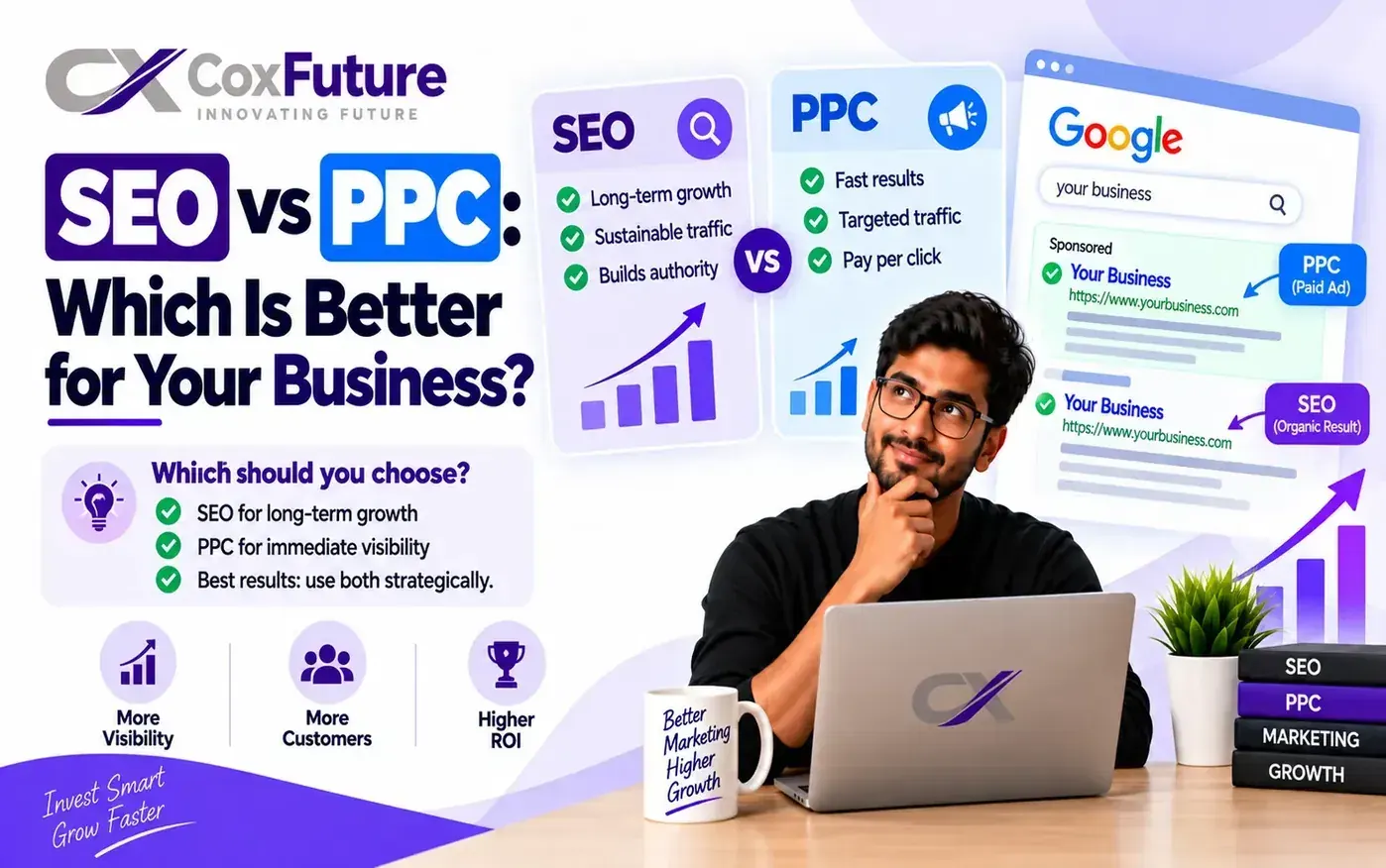
Neither is better in every situation. PPC (pay-per-click advertising) gets you leads this week but stops the moment your budget stops. SEO (search engine optimization) takes 6–12 months to build but keeps delivering traffic without paying per click. The right choice depends on how fast you need leads, your budget, your competition and how long your customers take to decide.
What SEO and PPC Actually Are
SEO (Search Engine Optimization)
SEO is the work of earning free (organic) rankings on Google. It includes technical fixes, on-page optimization, content that answers customers' questions, local optimization and building authority through backlinks. You do not pay Google for clicks; you invest in the work (time, content, specialists).
PPC (Pay-Per-Click)
PPC means paying for ads that appear at the top of search results (Google Ads) or on social platforms (Meta, LinkedIn, YouTube). You bid for keywords or audiences and pay each time someone clicks. Traffic starts as soon as the campaign is approved and stops when you pause it.
SEO vs PPC: Side-by-Side Comparison
| Factor | SEO | PPC |
|---|---|---|
| Speed to results | Slow: 3–6 months for early gains, 6–12 for strong results | Fast: traffic within days of launch |
| Upfront cost | Moderate: monthly fee or in-house effort | Low to start: any daily budget, plus management fee |
| Cost per click | No per-click charge | Pay for every click (often ₹10–₹200+ in India; far higher in competitive niches) |
| Long-term cost per lead | Falls over time as rankings compound | Stays flat or rises as competition grows |
| Traffic when spending stops | Continues, declining slowly | Stops immediately |
| Trust and clicks | Organic results are generally trusted more and get most clicks | Labeled "Sponsored"; some users skip ads |
| Control and targeting | Limited: rankings are not guaranteed | High: choose keywords, location, device, time, audience, budget |
| Testing and data | Slow feedback loops | Fast: test offers, pages and messaging within days |
| Scalability | Gradual: more content and links | Immediate: raise budget (diminishing returns apply) |
| Main risk | Algorithm changes; long wait with no guarantee | Burning budget on poor targeting, click fraud, rising costs |
Advantages of SEO
- Lower cost per lead in the long run.
- Builds credibility and brand visibility.
- Captures people at every stage, from research to buying.
- Content keeps working for years and compounds.
Disadvantages of SEO
- Slow, with no guaranteed positions.
- Results depend on competition and algorithm changes.
- Needs consistent effort and quality content.
Advantages of PPC
- Immediate visibility and leads.
- Precise targeting by location, intent, device and audience.
- Easy to measure and scale; fast testing of offers and landing pages.
- Works well for launches, offers and seasonal pushes.
Disadvantages of PPC
- Traffic stops when budget stops; nothing is built.
- Costs rise in competitive markets.
- Poor campaigns waste money quickly.
- Requires ongoing optimization.
Cost and ROI Over Time
The key difference is the shape of the cost curve. With PPC, cost per lead is roughly constant from month one: if a lead costs ₹800 today, it will cost about that (or more) next year. With SEO, you invest first with little return, then cost per lead falls steadily as rankings, content and links accumulate.
| Period | PPC | SEO |
|---|---|---|
| Months 1–3 | Leads start immediately; often costly while campaigns are tuned | Foundation work; few or no leads |
| Months 4–6 | Optimized campaigns, better efficiency | Rankings rise; first steady enquiries |
| Months 7–12 | Stable, with cost tied to budget | Growing traffic; falling cost per lead |
| Year 2+ | Same effort and spend for the same output | Compounding traffic at the lowest cost per lead |
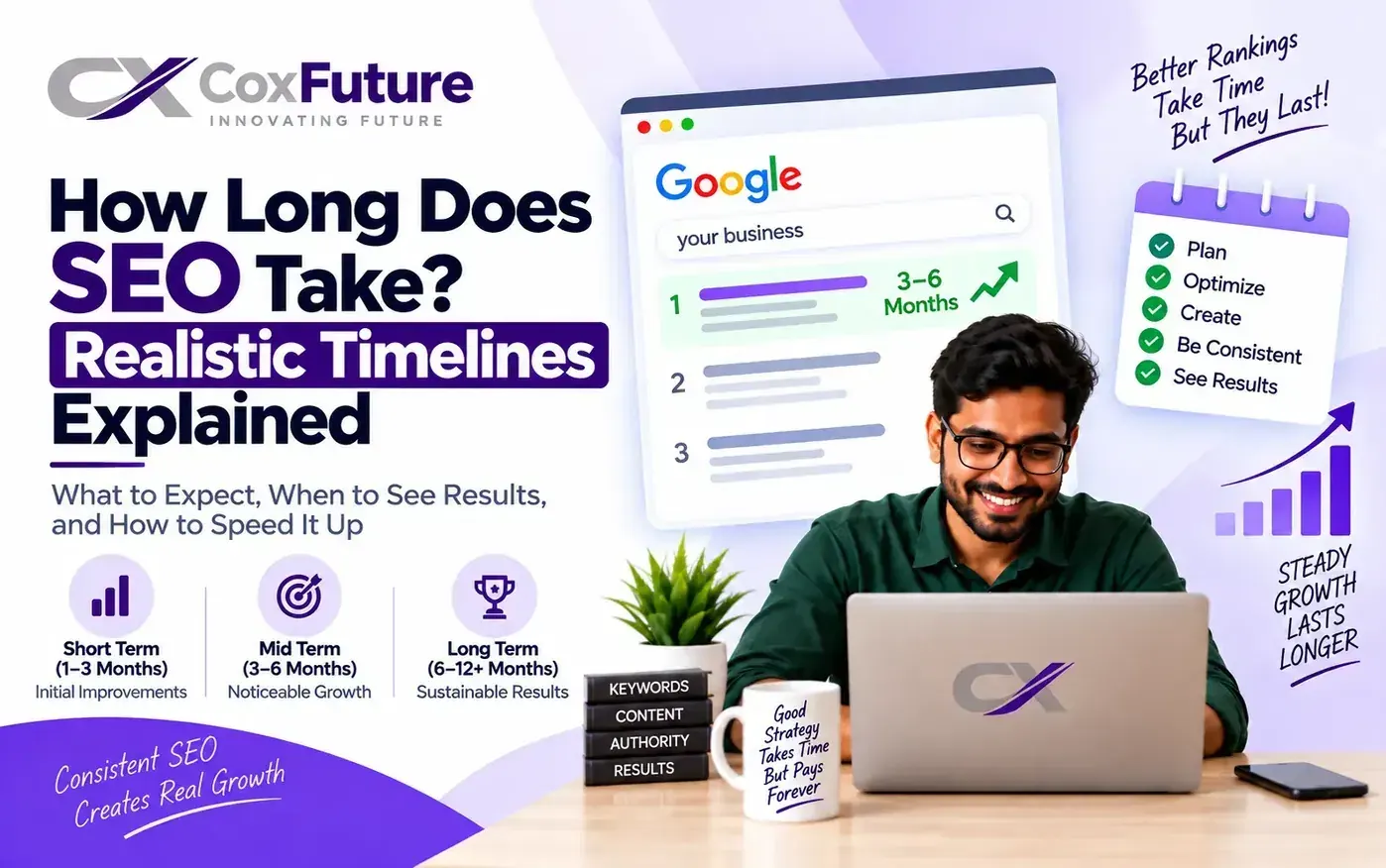
As a rule of thumb, PPC wins in the first six months; SEO often wins on total cost after 12 to 18 months. The exact breakeven depends on industry and competition. If you want to know how long SEO takes in your situation, see our realistic SEO timeline guide.
Which Should You Choose?
Choose PPC first if:
- You need leads or sales within weeks (a launch, a seasonal offer, a cash-flow need).
- You are testing a new product or market and want fast data.
- Your website is new and has no authority yet.
- Your customer lifetime value is high, so paid clicks still pay off.
- You run limited-time events or promotions.
Choose SEO first if:
- You can wait 6–12 months and want a durable, lower-cost channel.
- You have a limited monthly budget and cannot fund ongoing ads.
- Your customers research before buying (B2B, services, high-consideration products).
- Your industry has very high cost per click, making ads expensive.
- You serve a local area; Google Business Profile optimization is often a fast, low-cost win.
Quick decision guide
| Your situation | Best starting point |
|---|---|
| Brand-new business needing customers now | PPC + Google Business Profile, with SEO started in parallel |
| Local service business (clinic, salon, contractor) | Local SEO first, add small PPC budget for urgent demand |
| E-commerce store | Both: PPC for product campaigns, SEO for category and content pages |
| B2B / SaaS with long sales cycle | SEO and content as the base, targeted PPC for high-intent keywords |
| Small budget, no deadline | SEO |
| Promotion, event or product launch | PPC |
| Established brand wanting efficiency | Shift budget toward SEO while protecting top PPC performers |
Using SEO and PPC Together
The question is often "which first?" rather than "which only?". The two channels reinforce each other:
- PPC data feeds SEO. Ad campaigns show which keywords actually convert, so you invest in ranking for those terms.
- SEO lowers reliance on ads. As organic rankings grow, you can reduce spend on keywords you now rank for, while keeping ads on high-value ones.
- Double visibility builds trust. Appearing in both the ad and organic results for the same search increases total clicks and credibility.
- Landing page learnings transfer. Headlines, offers and page layouts proven in ads can be applied to organic pages.
- Retargeting recovers visitors. SEO brings people in cheaply; PPC retargeting brings back those who did not convert.
Note: Google has said running ads does not directly improve organic rankings. The benefits above come from shared data, traffic and brand awareness, not a ranking boost.
A practical phased plan
- Months 1–3: Launch focused PPC on your highest-intent keywords, while fixing technical SEO and optimizing your key pages and Google Business Profile.
- Months 4–6: Use ad data to guide content and keyword targets. Keep PPC on proven converters; pause weak keywords.
- Months 7–12: As organic rankings grow, reduce spend on keywords you now rank for and redirect budget to new opportunities and retargeting.
- Year 2+: SEO becomes your base channel; PPC is used strategically for launches, offers and competitive terms.
Common Mistakes to Avoid
- Expecting SEO to work like ads. Judging SEO after one or two months leads to abandoning it just before it works.
- Running PPC without a good landing page. Paid clicks to a slow, confusing page waste budget.
- Targeting broad keywords. Specific, high-intent phrases convert far better than general terms in both channels.
- No conversion tracking. Without tracking calls, forms and sales, you cannot tell what is working.
- Setting and forgetting PPC. Campaigns need regular review of keywords, negative keywords, ad copy and bids.
- Cheap SEO shortcuts. Bought links and auto-generated content can lead to penalties that take months to reverse.
- Treating it as either/or. Cutting all paid or all organic often leaves a gap in leads or long-term growth.
- Ignoring the website itself. If visitors do not convert, neither channel will pay off.
Metrics to Track for Each
SEO
- Organic traffic and impressions (Google Search Console, Analytics)
- Keyword rankings and number of ranking keywords
- Click-through rate
- Organic leads, calls and conversions
- Backlinks and referring domains
PPC
- Click-through rate and quality score
- Cost per click and cost per lead (CPA)
- Conversion rate
- Return on ad spend (ROAS)
- Impression share and lost share due to budget or rank
Whichever you choose, measure by leads and revenue, not just traffic. A smaller number of qualified visitors beats a large number of casual clicks.
The bottom line
If you need leads now, start with PPC. If you are building for the long term, invest in SEO. If you want the strongest results, combine them and let the data guide how you split your budget. Not sure where to start? Talk to our team and we will recommend the mix that fits your goals and budget, even if that means starting small. You can also explore our SEO services.