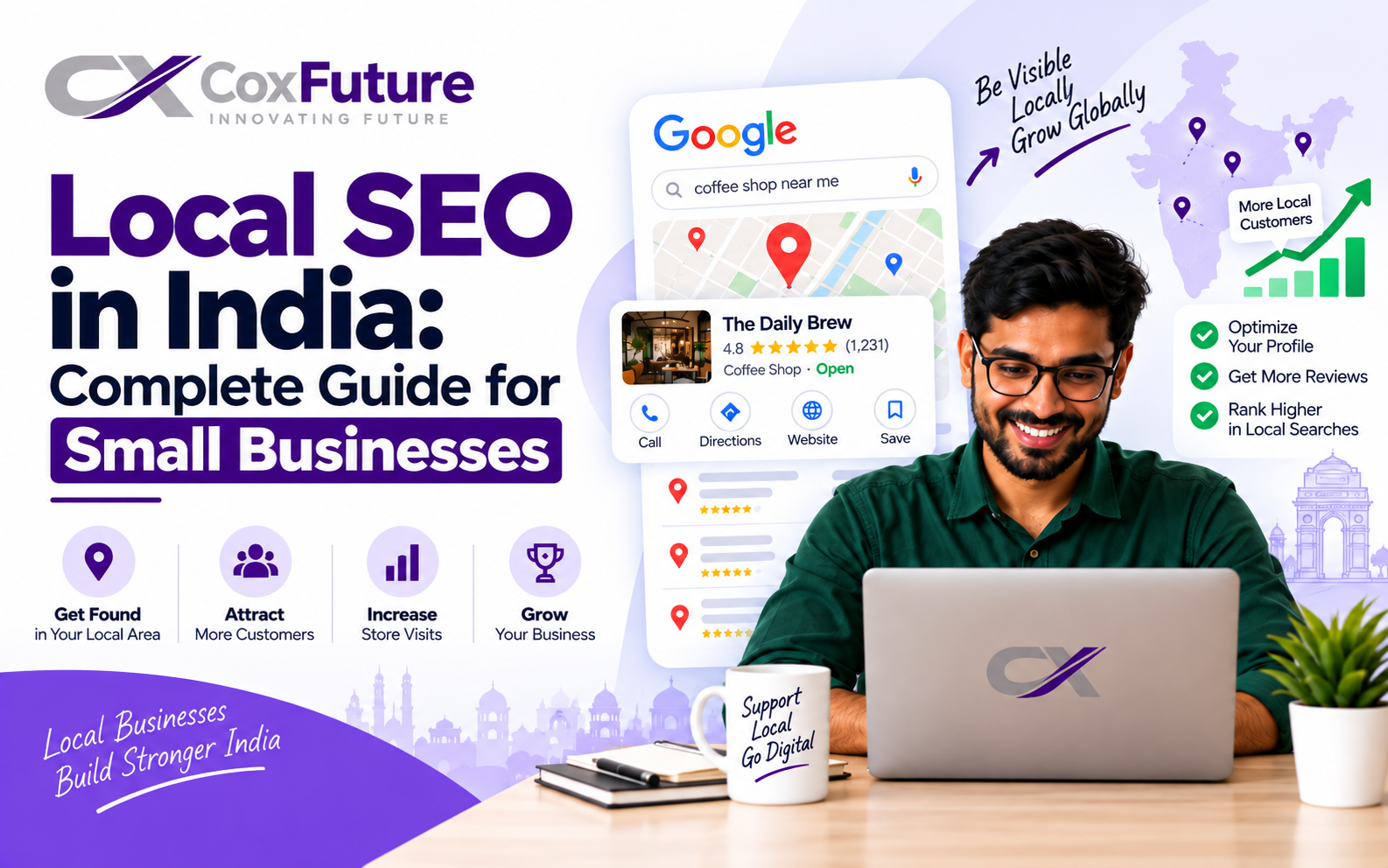
What Is Local SEO (And Who Actually Needs It)?
Local SEO is the discipline of appearing when customers in your area search for what you sell. When someone in Ghaziabad searches "interior designer near me" or "CA firm in Ghaziabad", Google shows a map pack and location-weighted results. Local SEO is the work of being one of those results.
You need it if your customers are geographic — clinics, restaurants, builders, schools, showrooms, law firms, repair services, gyms, coaching institutes, and yes, agencies serving a city or region. You need less of it if you sell purely online to a national audience (that's standard SEO — see our guide to getting on Google).
How Google Decides Local Rankings
Relevance comes from your Google Business Profile categories, services, and the match between your content and the search. Proximity is fixed by your location — you can't move your shop, but you can win in your immediate area and in the areas you genuinely serve. Prominence is your reputation: reviews, citations, links from local sites, and how established your brand is. Of the three, prominence and relevance are fully in your control — which is where all local SEO effort goes.
The Local SEO Playbook (In Order)
- Google Business Profile first. Nothing else matters until this is complete and verified. Our step-by-step GBP optimization guide covers it in detail — categories, photos, services, posts and the reviews engine.
- Put your city in your website's title tags and content. "Dental Clinic in Vaishali, Ghaziabad" in the title, H1, and naturally in page copy. Search engines and customers both need the location signal.
- Build NAP consistency everywhere. Identical name, address, phone format on your site footer, contact page, GBP, Justdial, Sulekha, IndiaMART (if relevant), Facebook and every directory. Conflicting data suppresses local rankings.
- Get real citations: trade directories, local chamber/business association listings, industry bodies, local news mentions. Quality over quantity — 30 accurate ones beat 300 spammy ones.
- Collect reviews relentlessly (see the GBP guide for the system) and mention your service city naturally in replies.
- Create city-specific content only where you truly serve: a genuine "areas we serve" section with real details beats 10 thin doorway pages that Google increasingly ignores.
- Add local business schema (LocalBusiness JSON-LD with your exact NAP) to your website so machines read the same facts as humans.
- Get locally relevant links: sponsor a local event, speak at a college, partner with complementary local businesses. One link from a Ghaziabad news site outperforms 50 generic directory links.
City and Area Pages — The Right Way vs the Doorway Way
The doorway way (don't): one template page per city with the city name swapped — "Best AC Repair in Noida / Delhi / Gurugram / Faridabad…" — no unique content, no local proof. Google devalues these, and customers can tell.
The genuine way (do): build a real page only for locations where you have a story to tell — actual clients there, a physical presence, or a genuinely different service scope. Include: local client examples (with permission), area-specific service details, a map, testimonials from that city, and staff who work there. One authentic page outranks ten templates.
How Long It Takes and What It Costs
Foundation work (GBP, citations, on-site signals) shows movement in 4–6 weeks. Competitive city rankings take 3–6 months. Local SEO retains its value once earned — a strong map-pack position generates calls daily without per-click costs.
Typical Indian market pricing: freelancer-run local SEO ₹5,000–₹15,000/month; agency-run local SEO ₹15,000–₹40,000/month (see our full SEO cost guide for context). Our own Google Business Profile service starts at $300, and our SEO services for Indian businesses include the full local stack — audit to reviews.
If you serve multiple cities or want an expert audit of your local visibility, talk to us — we'll show you exactly which searches your competitors win today and what it takes to take them.